
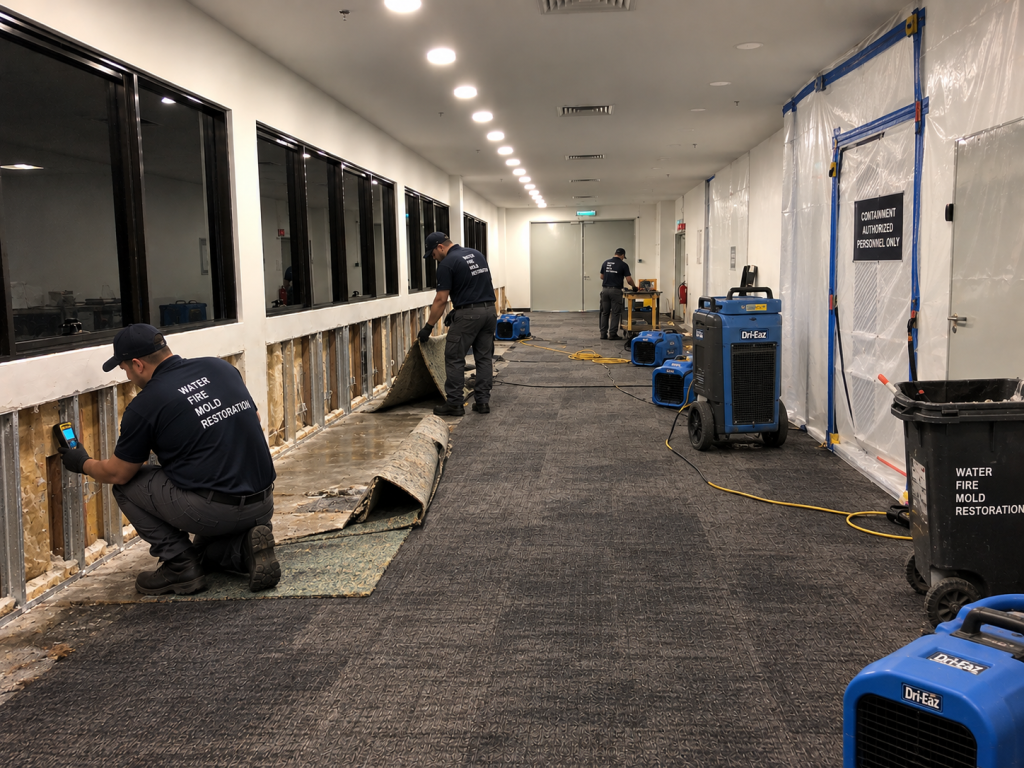
Water Damage Restoration Services in Lake Tahoe
Water damage in Lake Tahoe can begin with a broken pipe, leaking roof, plumbing failure, appliance problem, snow-related water intrusion or an unexpected indoor flood. What starts in one area of a property can quickly involve flooring, walls, ceilings, insulation, framing and multiple building systems.
Mountain properties introduce another level of complexity.
Freezing temperatures can contribute to plumbing failures. Snow and changing weather conditions can expose weaknesses in roofing and exterior assemblies. Vacation properties may remain unoccupied long enough for a small leak to become a substantial water loss before anyone discovers it.
- Water Damage Restoration
- Flood Damage Repair
- Emergency Water Damage Cleanup
- Insurance Claim Assistance
- Moisture Testing Walls & Floors
- Broken Pipe Plumbing Repair
- Water Damage Repair
- Locally Owned Restoration Company
Commercial buildings face different concerns.
Hotels, restaurants, retail properties, offices, multifamily buildings and other commercial facilities may need to protect occupants, equipment and business operations while restoration is underway.
Water Damage Lake Tahoe provides water damage restoration and repair services designed around the complete property—not simply the area where water is visible.
Our services include emergency water cleanup, water extraction, structural drying, moisture evaluation, flood repair, broken-pipe damage, reconstruction and commercial water-damage recovery throughout the Lake Tahoe area.
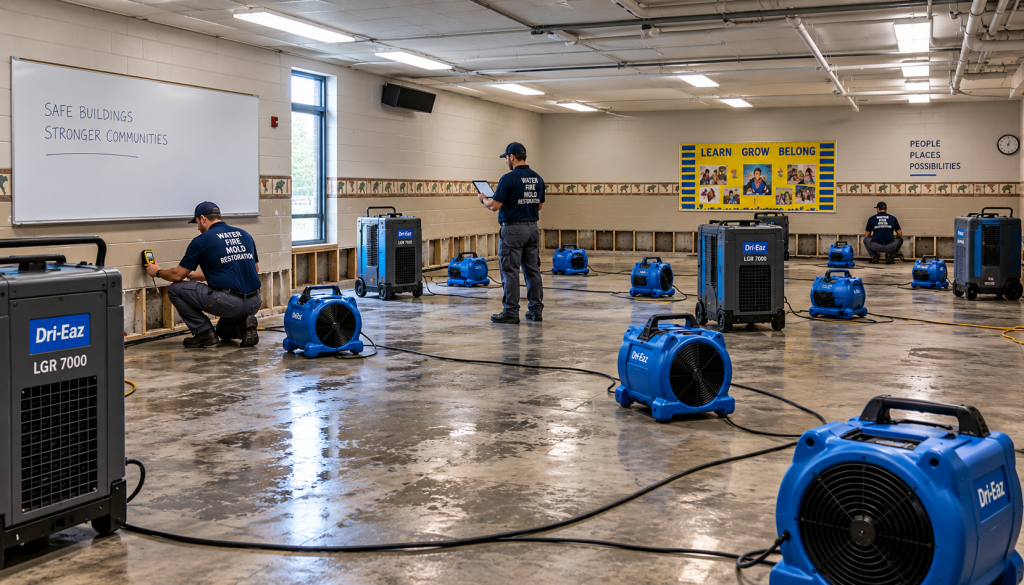
Water Damage Restoration
Water damage restoration begins by understanding what happened and how far the water traveled.
Visible standing water may represent only part of the loss.
Moisture can move underneath flooring, enter wall cavities, saturate insulation and travel between floors. Water originating near the roof may follow framing or other building components before appearing at a ceiling somewhere else.
Multi-level Tahoe homes can be particularly susceptible to vertical water migration.
A plumbing failure upstairs can eventually involve flooring on the source level, walls surrounding the leak, ceiling materials below and finishes on the lower floor.
Restoration should therefore follow the water rather than simply concentrating on the first wet room.
Our process can include extraction, moisture evaluation, structural drying, selective material removal and reconstruction depending on the conditions found at the property.
Emergency Water Damage Cleanup
A significant water loss requires fast decisions.
The first priorities are identifying the source, controlling additional water when possible and determining which portions of the property have been affected.
Standing water may need to be extracted.
Furniture and contents can require protection or relocation. Wet building materials need to be evaluated. Areas that appear unaffected should also be considered if water could have traveled underneath floors or through concealed assemblies.
Emergency response becomes particularly important when a Tahoe property is discovered after being vacant.
A leak that occurred hours or days earlier can produce very different conditions from one discovered immediately.
Understanding the duration of the loss helps determine the appropriate restoration strategy.
Flood Damage Repair
Indoor flooding can affect nearly every component of a building.
Floors are often affected first, but water does not necessarily stop there.
Drywall can absorb moisture.
Baseboards may swell.
Paint can bubble or discolor.
Insulation can become wet inside wall cavities.
Wood framing can absorb moisture.
Cabinetry may trap water underneath or behind built-in components.
Electrical outlets and wiring may become involved.
HVAC and mechanical equipment can also require evaluation depending on where the flooding occurred.
Flood repair needs to account for these connections.
The objective is not simply removing the water from the floor. It is understanding what happened to the building as a result of the flood.
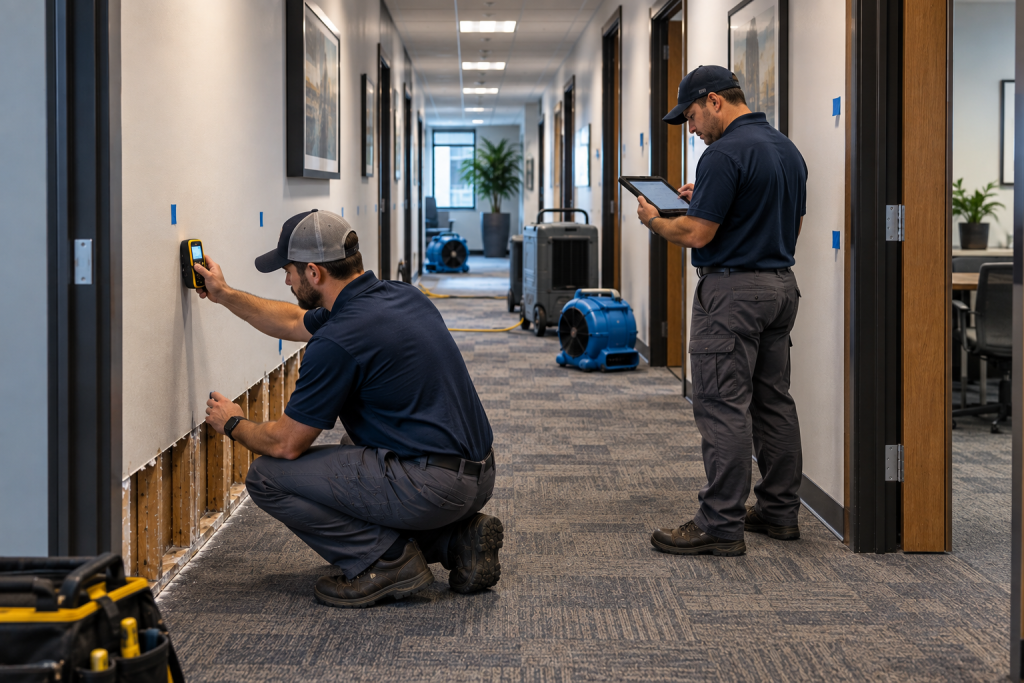
Frozen & Broken Pipe Water Damage
Frozen and broken pipes are particularly important concerns in the Lake Tahoe environment.
When water freezes inside a plumbing system, pressure can contribute to pipe or fitting failures. Damage may not become obvious until temperatures change or water begins flowing again.
Vacation and seasonal properties create additional risk because a plumbing failure can occur while nobody is present.
Water may continue moving through the building before the problem is discovered.
Broken pipes can affect:
- Flooring and subfloors
- Drywall
- Ceilings
- Insulation
- Structural framing
- Cabinets
- Electrical components
- Lower floors
- Crawlspaces
- Furnishings and contents
Stopping the plumbing problem is only the beginning.
The surrounding structure must then be evaluated to determine where the released water traveled.
Roof Leaks, Snow & Water Intrusion
Not every Tahoe water loss originates from plumbing.
Roofs and exterior building assemblies protect properties from rain, snow and changing mountain weather conditions.
When water penetrates the roof assembly, the visible interior damage may appear far from the actual exterior problem.
Moisture can move through insulation, decking and framing before reaching drywall or ceilings.
That makes source investigation especially important.
Simply repairing a ceiling stain does not solve a roof-related water intrusion problem.
Interior restoration should be coordinated with correction of the exterior source so reconstructed areas are not exposed to the same problem again.
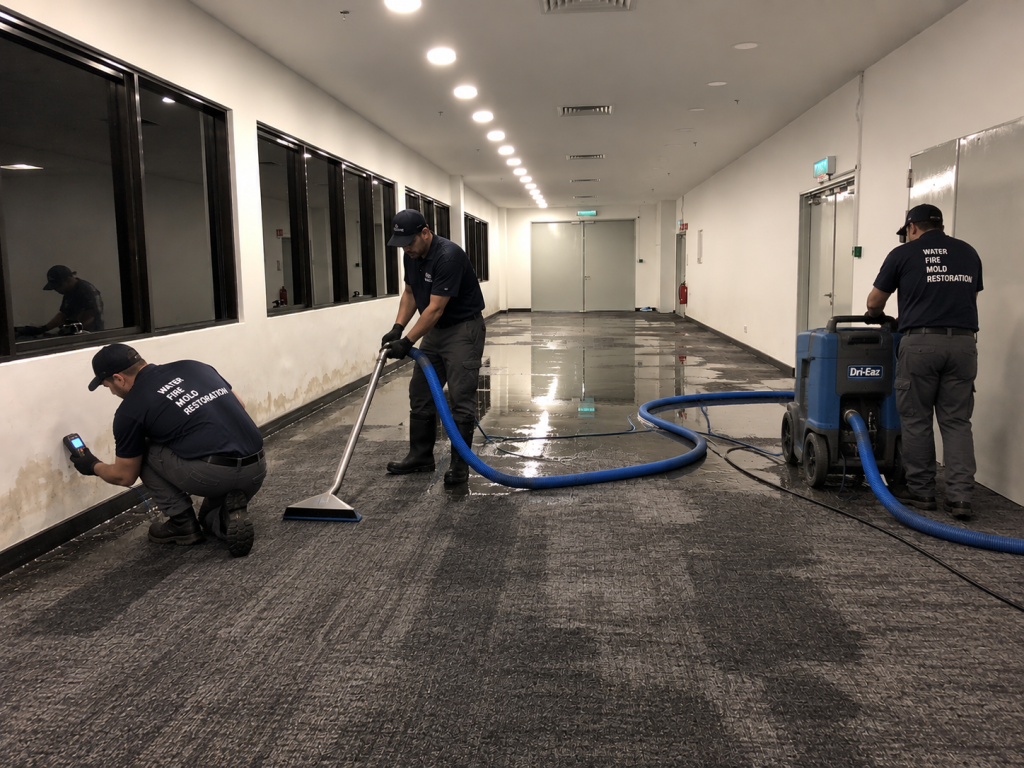
Water Damage Around Windows & Glass
Windows are another important part of the building envelope.
Water appearing around a window can originate from several areas surrounding the opening. Exterior finishes, flashing, seals and adjoining construction may all influence how moisture enters.
Once inside, water can affect the wall below the window, insulation, framing, drywall, paint and flooring.
Large glass areas found in Tahoe homes and commercial properties deserve particular attention.
Many mountain properties are designed around views, which can mean expansive windows and substantial glass systems.
Water intrusion around those assemblies should be investigated as part of the complete building envelope rather than treated only as an interior drywall problem.
Flooring & Subfloor Water Damage
Floors frequently reveal the first visible signs of an indoor water loss.
Carpet can absorb water quickly.
Wood flooring may swell, cup or distort.
Laminate products can deteriorate.
Water can migrate beneath tile, resilient flooring and other finished surfaces.
What lies underneath matters just as much.
Subflooring and underlayment can remain wet after the surface appears dry. Concrete substrates can also retain moisture that affects subsequent flooring installation.
Flooring decisions should therefore be based on the entire assembly.
Some materials may be dried or selectively repaired.
Others may require replacement.
Determining the difference can prevent unnecessary demolition while avoiding the mistake of installing new finishes over unresolved moisture.
Wall, Drywall & Paint Restoration
Walls can conceal a surprising amount of water damage.
Drywall may wick moisture upward from a flooded floor.
Insulation inside the wall can become wet without producing immediate surface damage.
Paint can blister, discolor or separate as underlying materials absorb moisture.
Baseboards and trim may swell or pull away.
Behind those finishes can be framing, wiring and plumbing.
Selective opening of affected wall areas can sometimes provide access for evaluation and drying without requiring unnecessary removal of entire walls.
Once appropriate drying has occurred, reconstruction may include insulation, drywall, texture, primer, paint, baseboards and finish carpentry.
Ceiling Water Damage
Water appearing overhead requires careful investigation.
The source might be a plumbing line, bathroom, roof, mechanical system or another area located above the damaged ceiling.
Multi-story homes can experience water moving from one level into another.
Commercial buildings may have plumbing, HVAC, electrical systems and other infrastructure above suspended ceilings.
The visible stain is therefore only evidence of where water eventually appeared.
Restoration should investigate what happened above it.
Damaged ceiling materials, insulation and surrounding assemblies can then be addressed based on the actual extent of the loss.
Structural Drying & Moisture Evaluation
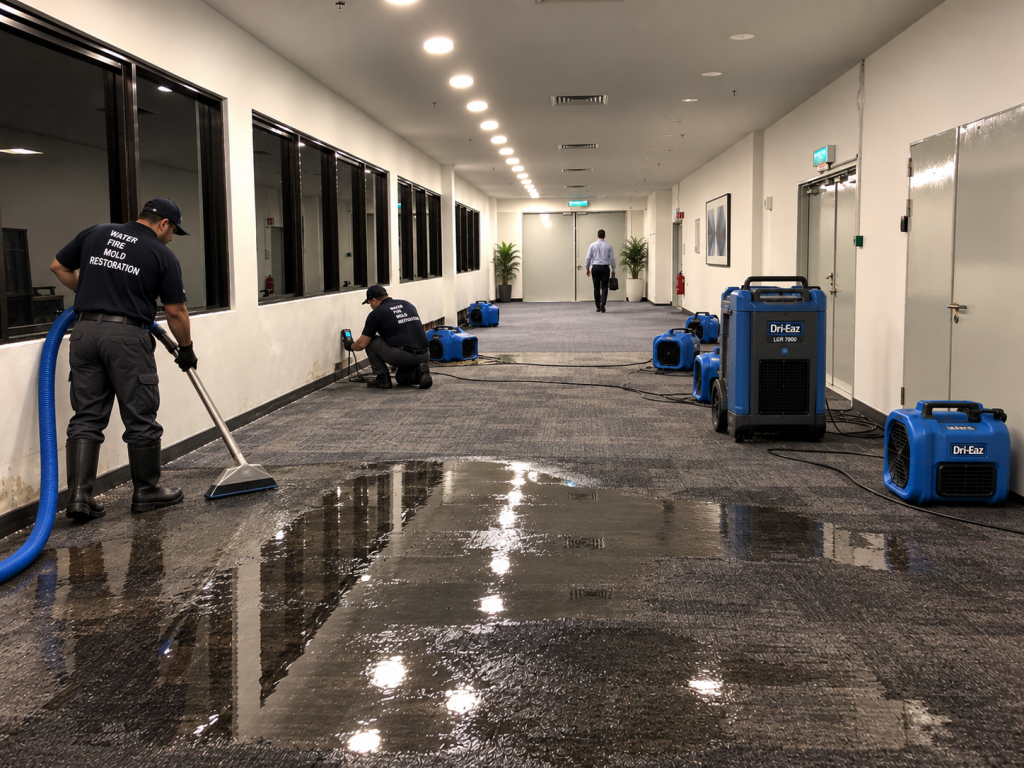
Removing visible water is not the same as drying a building.
Moisture can remain inside porous construction materials after standing water has disappeared.
Structural drying focuses on those materials.
Air movement and dehumidification may be used depending on the loss and building conditions. Monitoring can help determine whether affected areas are progressing toward appropriate drying conditions.
Different materials behave differently.
Wood framing does not dry like drywall.
Concrete does not behave like carpet.
An enclosed wall cavity presents different conditions from an exposed floor.
Drying strategies should reflect those differences.
Moisture Testing of Walls & Floors
Hidden moisture can significantly change the scope of a water-damage project.
A room may look dry while water remains beneath flooring or inside adjoining walls.
Moisture evaluation helps establish the boundaries of the affected area.
That information can also guide demolition decisions.
Rather than automatically removing everything near the loss, restoration work can concentrate on materials actually affected.
Conversely, testing can identify moisture beyond the visibly damaged area that might otherwise be missed.
Understanding those boundaries is particularly valuable before reconstruction begins.
Electrical Systems After Water Damage
Electrical systems require caution after a significant water loss.
Outlets, switches, lighting, wiring, electrical panels and powered equipment may potentially be affected depending on where the water traveled.
Property owners should not assume an electrical component is safe simply because the surrounding surface has dried.
Qualified evaluation may be necessary.
Commercial properties can involve additional infrastructure such as data systems, security equipment, access controls, emergency systems and specialized circuits.
Those systems should be considered before damaged walls or ceilings are reconstructed.
Plumbing Repairs & Water Damage
Plumbing may be the source of the original problem, but it can also become part of the restoration process.
Broken pipes, failed fittings, water heaters, toilets, supply lines and other plumbing components can produce substantial indoor flooding.
Once the affected area has been opened, surrounding plumbing conditions may also be visible.
That can provide an opportunity to identify another deteriorated component before walls or ceilings are closed again.
Correcting the source and restoring the resulting building damage should be treated as connected parts of the recovery process.
HVAC & Mechanical Systems
Heating and mechanical systems are especially important in a mountain environment.
HVAC equipment, ductwork and mechanical components may be located in areas affected by water or may pass through damaged portions of the structure.
Water entering mechanical spaces requires additional evaluation.
Moisture surrounding ductwork or insulation can also deserve attention even when the primary HVAC equipment remains unaffected.
Commercial buildings can contain significantly larger systems with multiple zones and mechanical areas.
Understanding how the water loss intersects with those systems helps prevent reconstruction from moving ahead before important infrastructure has been considered.
Crawlspace Water Damage
Many Tahoe-area properties contain crawlspaces or lower building areas that can be affected by plumbing failures, drainage problems or water moving downward from occupied portions of the structure.
These spaces can be easy to overlook because they are not part of the normal living environment.
Water below the floor can still affect insulation, framing and other structural components.
Access conditions may also make drying more difficult than in an open room.
Evaluating lower areas of the building can be important when the path of the water suggests moisture may have traveled downward.
Vacation Home & Second-Home Water Damage
Lake Tahoe contains a substantial number of vacation and second homes.
Those properties present a distinctive restoration challenge:
The water loss may occur when nobody is there to see it.
A failed supply line in an occupied home may be discovered within minutes.
The same failure in an unoccupied property could continue for hours or longer.
By the time the owner, property manager or neighbor discovers the problem, water may have traveled through several rooms or floors.
Restoration planning should account for that possibility.
The first visible damage may represent only a portion of what happened while the property was unattended.
Commercial Water Damage Restoration
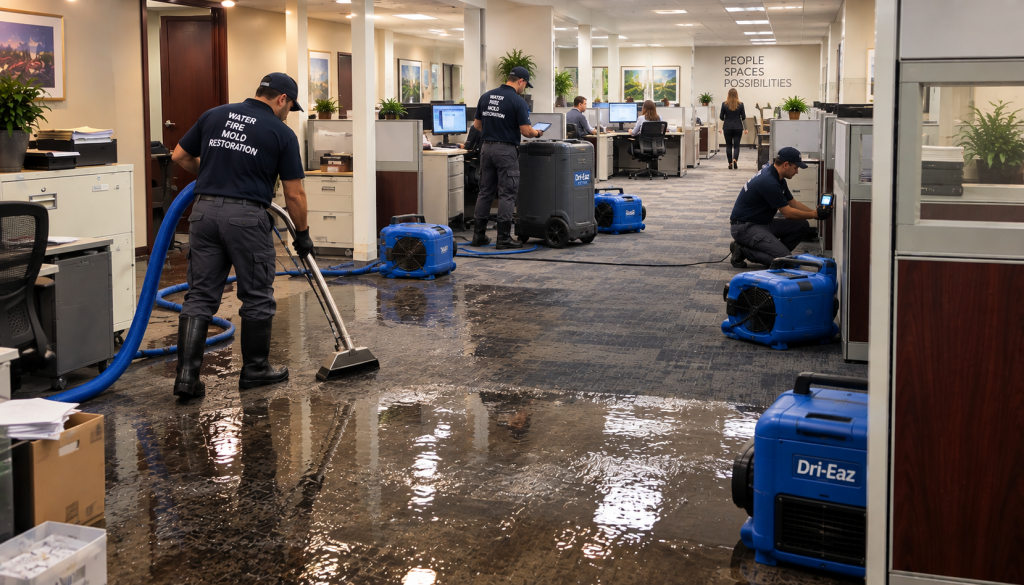
Commercial properties require a different restoration strategy because the building often needs to continue supporting an active business.
Lake Tahoe hotels, restaurants, retail stores, offices, multifamily properties and other commercial facilities can experience water losses involving multiple rooms, tenants or operational areas.
A hotel may have occupied rooms near the damaged section.
Restaurants contain concentrated plumbing, electrical and mechanical infrastructure.
Retail stores need to protect merchandise and customer areas.
Office buildings can contain several tenants and shared building systems.
Commercial restoration should therefore consider both the structure and the business operating inside it.
Hotel & Hospitality Water Damage
Hospitality properties are particularly important throughout the Tahoe market.
A plumbing failure affecting several rooms can quickly become an operational problem.
Guest access, occupied areas, flooring, ceilings, bathrooms, furnishings and building systems may all become part of the restoration plan.
Phasing can be valuable when conditions allow it.
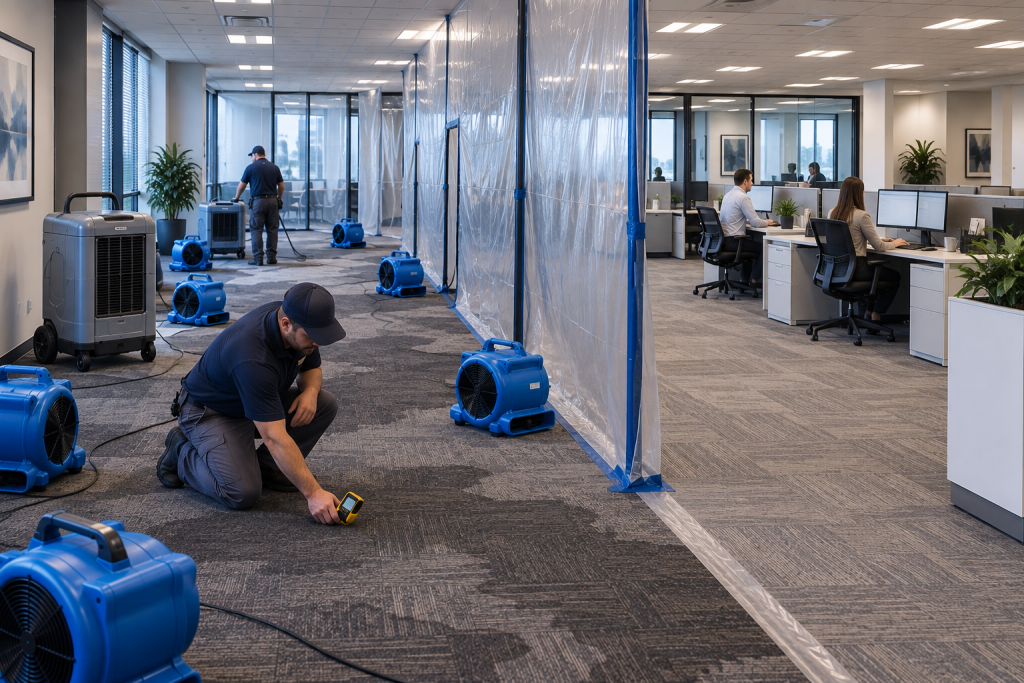
Instead of treating the entire property as one construction zone, affected areas may sometimes be isolated while other portions continue operating.
The restoration strategy should support the property’s path back toward normal occupancy.
Restaurant & Retail Water Damage
Restaurants and retail properties create another specialized environment.
Restaurants combine water lines, drains, commercial equipment, electrical systems, flooring and HVAC within highly active spaces.
Retail stores may need to protect merchandise, displays and customer areas while restoration is underway.
Business interruption becomes an important consideration.
Fast water removal matters, but so does planning the work intelligently.
Containment, material staging, equipment placement and reconstruction sequencing can influence how quickly usable portions of the business return to service.
Commercial Tenant Improvement & Build-Back
A major commercial water loss does not always need to end with the damaged space being reconstructed exactly as it existed.
Sometimes the loss occurs in an older tenant space already scheduled for renovation.
Once flooring, ceilings, drywall or partitions have been removed, property owners can evaluate whether planned tenant improvements should be coordinated with the reconstruction.
Office layouts may change.
Retail spaces can be reconfigured.
Interior glass can be introduced.
Lighting and electrical systems may be updated.
HVAC distribution can be adjusted around a new layout.
Flooring can be selected for the future use of the property.
Instead of:
Water damage → restoration → future demolition → tenant improvement
the project may be planned as:
Water mitigation → structural drying → TI planning → commercial build-back.
That approach can reduce duplicated construction while giving the property a clearer path toward its next use.
Water Damage Reconstruction
Restoration eventually transitions from removing damage to rebuilding the property.
Depending on the scope of the loss, reconstruction can involve:
- Drywall and texture
- Insulation
- Flooring
- Ceilings
- Paint
- Baseboards and trim
- Cabinetry
- Doors
- Interior finishes
- Electrical finish work
- Plumbing fixtures
- Commercial build-back
- Tenant improvement construction
Planning reconstruction while drying is underway can help reduce unnecessary delays between mitigation and rebuilding.
Materials can be selected.
Trade requirements can be identified.
Commercial projects can begin coordinating the next phase.
The goal is a smoother transition from damaged building to usable property.
Insurance Claim Assistance
Water damage can involve extensive documentation, particularly when multiple areas or building systems are affected.
Understanding the source, documenting affected areas and maintaining information about the restoration process can help property owners organize the loss.
Commercial claims can become particularly complex because property damage may intersect with business operations, equipment, inventory and tenant spaces.
Clear documentation throughout the restoration process provides a stronger record of what occurred and what work was required.
Complete Water Damage Services for Lake Tahoe Properties
Every water loss is different.
A small plumbing leak in an occupied home does not create the same conditions as a frozen pipe inside an unattended vacation property.
Roof intrusion presents different challenges from an appliance failure.
A flooded hotel requires different planning than a single-family residence.
The restoration process should respond to those differences.
Our Lake Tahoe water damage services are built around understanding the complete property—from the roof and windows to walls, ceilings, floors, framing, plumbing, electrical and HVAC systems.
For commercial buildings, that perspective extends into operations, reconstruction and tenant improvement build-back.
Water damage restoration is ultimately about more than removing water.
It is about understanding where the water came from, where it traveled, what it affected and what needs to happen before the property can be fully used again.
For water damage restoration services in the Lake Tahoe area, contact Water Damage Lake Tahoe at 775 501 6616.

We understand the devastation water damage can cause, and we are here to help. Our team of experts is experienced in all aspects of water damage restoration, so you can rest assured that your property will be restored to its pre-injury condition. We know the importance of restoring your home as quickly and efficiently as possible, which is why we offer a range of services to get you back on your feet as quickly as possible. From cleanup and restoration to reconstruction and insurance claims processing, we have everything you need to get your life back on track. Contact us today for a free consultation!